🛒 Diet & Shopping

Every ingredient your glider needs,
always in stock.

Sugar glider diet is complex and species-specific — getting it wrong leads to metabolic bone disease, obesity, and deficiencies that take months to show up and months more to correct. SuggieHub includes a built-in diet library with BML, TPG Fresh Diet, AWD, HSG, and more, plus a shopping list that tracks what you have and what you need.

Start tracking for free See all features
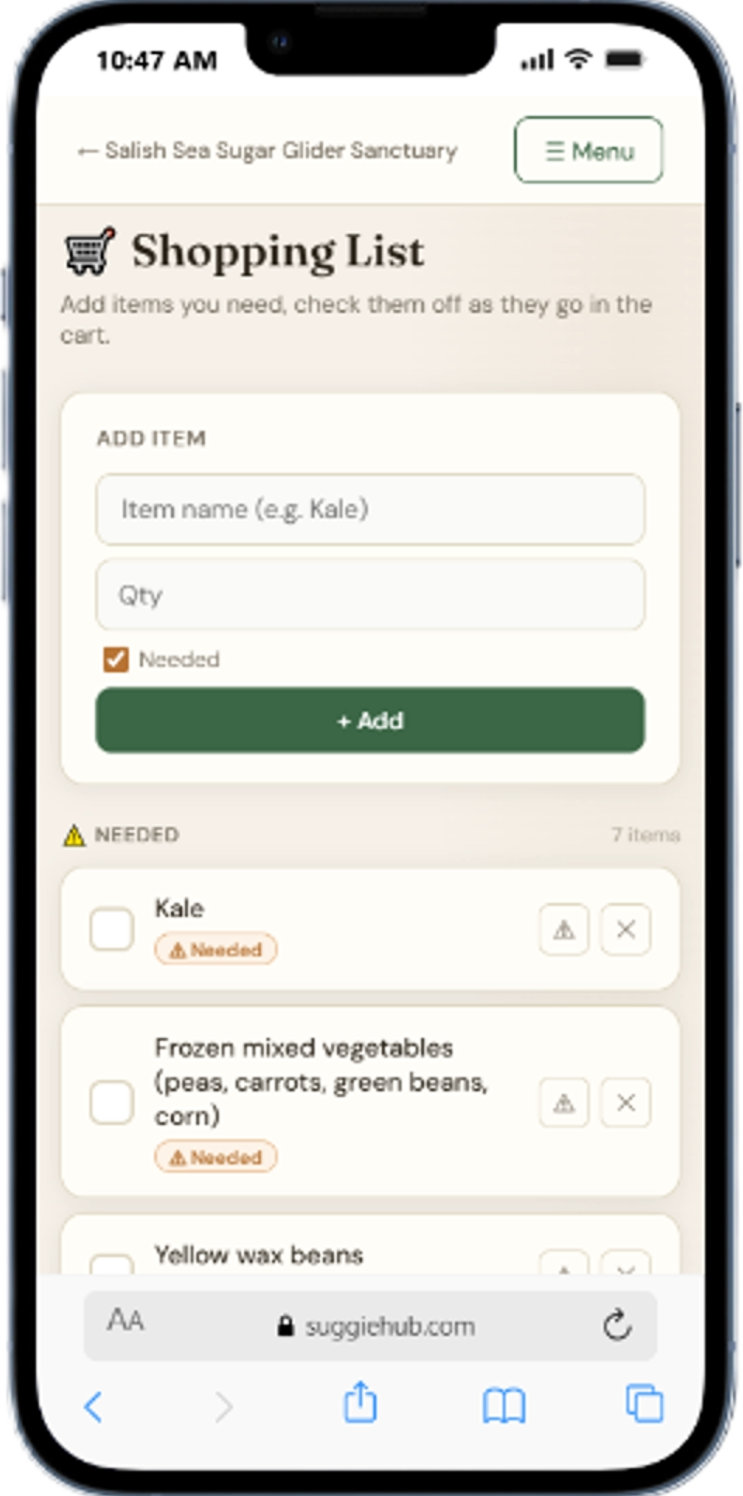
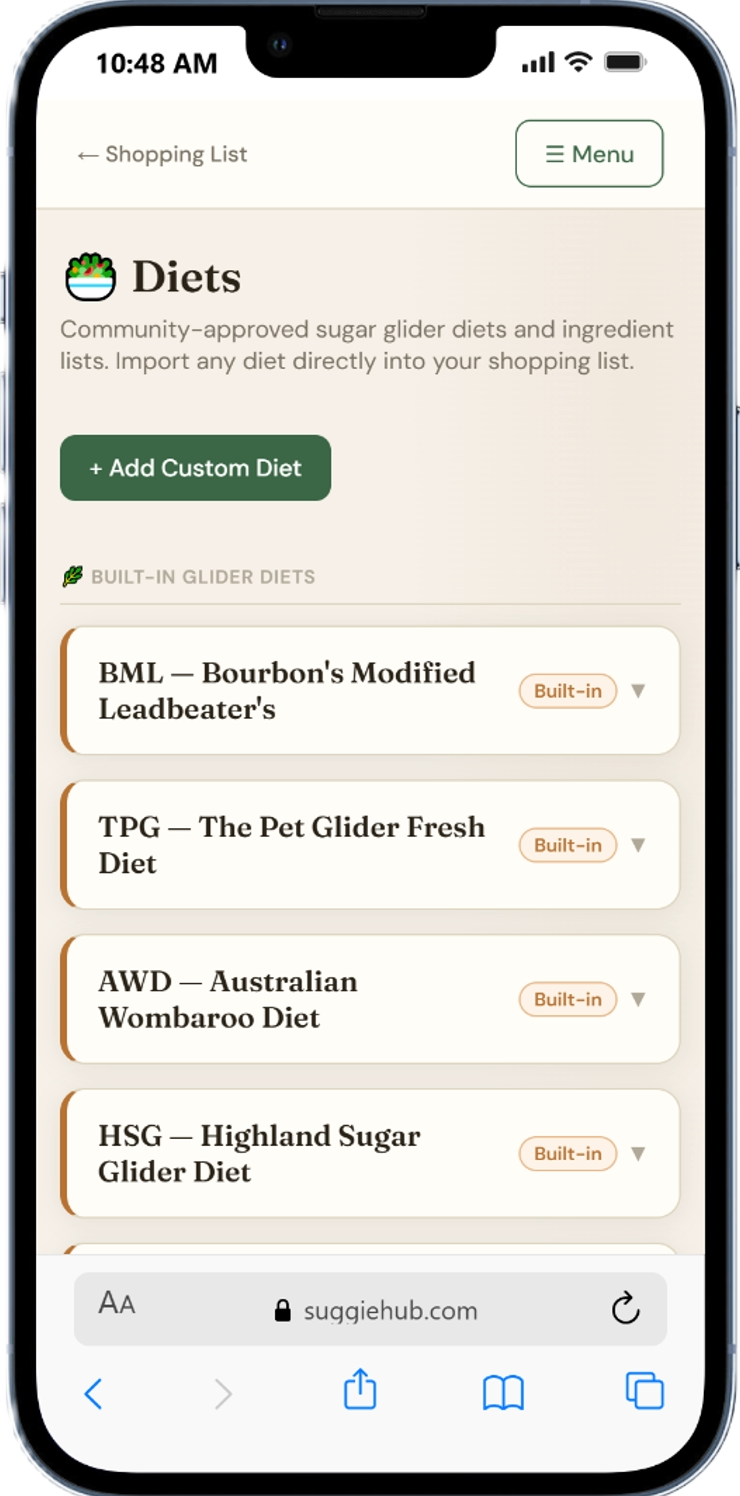
Sugar glider shopping list tracker showing needed vs in-stock item status Sugar glider diet library showing BML, TPG, AWD and other diet options with ingredient lists

What it does

Getting sugar glider nutrition right is harder than it looks. Unlike dogs or cats, there's no established commercial diet that covers everything a glider needs. The community-developed diets — BML, TPG Fresh Diet, AWD, HSG, and others — each have their own ingredient lists, preparation methods, and nutritional rationales. New owners often spend hours researching which diet to use before they can even begin shopping for it. And once you've picked a diet, making sure you always have the right ingredients on hand is its own ongoing task.

SuggieHub includes a built-in diet library so you don't have to go looking. Each diet entry shows the full ingredient list — what you need, in what form, and what it's for. When you find a diet you want to make, you can import its entire ingredient list directly into your shopping list with one tap. No transcribing from a forum post, no screenshot of someone else's supply list. It just moves over.

The shopping list itself tracks items by status: needed or in-stock. As you buy things, you mark them off. As you run low, you flip them back to needed. The list persists across sessions, so it's always current — it reflects your actual pantry state rather than the last time you thought about it. You can also add custom items that aren't part of any built-in diet, so the whole thing works as your single source of truth for glider supplies.

The Ca:P ratio — calcium to phosphorus — is one of the most important nutritional concerns for sugar gliders. An imbalanced ratio over time leads to metabolic bone disease (MBD), a serious and preventable condition. The diet library is built with this in mind, and understanding which foods support a healthy ratio is part of what makes the diet reference useful beyond just ingredient lists.
Diets in the library

A quick reference to what each major diet is and why it exists.

BML
Bourbon's Modified Leadbeater's

One of the most widely used staple diets in the community. A blended mix with honey, yogurt, eggs, apple juice, and a vitamin supplement. Freezes well and portion-packs easily.

TPG Fresh
The Pedigree Guide Fresh Diet

A whole-food approach focused on fresh fruits, vegetables, protein sources, and a calcium supplement. More prep time but a strong nutritional profile with high palatability.

AWD
Australian Wildlife Diet

Designed to more closely approximate what sugar gliders eat in the wild in Australia. Emphasizes diverse protein sources and native-style food items.

HSG
Healthy Sugar Glider Diet

A community-developed diet with an emphasis on Ca:P balance and variety. Often chosen by owners who want a structured but flexible feeding approach.

⚠️ Pick one diet and stick to it. Each staple diet is carefully calculated as a complete nutritional system. Mixing BML with TPG Fresh, for example, throws off the nutrient ratios both diets were built around and can lead to deficiencies or imbalances that take months to show up. Choose a diet that fits your routine and stay consistent.
🪲 Insects are enrichment, not a staple. Live or dried insects — mealworms, crickets — are great for mental stimulation and a protein boost, but they're a supplement, not a meal replacement. They're high in fat and phosphorus, which can throw off Ca:P balance if fed in excess. A few a week goes a long way.

Key capabilities

A diet library and shopping list that work together — so you always know what to make and what to buy.

📚

Built-in diet library

BML, TPG Fresh Diet, AWD, HSG, and more — all in one place with full ingredient lists and context.

📋

Full ingredient lists

Each diet shows every ingredient with the form it's needed in — no guessing, no hunting through forum threads.

One-tap import to shopping list

Import an entire diet's ingredient list to your shopping list in a single action. No transcribing required.

Needed vs in-stock status

Each item on your shopping list is either needed or in-stock. Mark items as you buy or run low — the list always reflects your actual supply.

Custom items on shopping list

Add anything that's not in a built-in diet — specific brands, supplements, cage supplies, whatever your routine requires.

⚖️

Ca:P ratio awareness

The diet library is built with calcium-to-phosphorus balance in mind. Understanding the ratio is part of choosing and preparing the right diet.

🔍

Diet comparison reference

Browse multiple diets side by side to understand the differences before you commit to one — or use multiple diets in rotation.

💧

Don't forget the water bottle

High-protein diets like BML and AWD can increase water intake. Add water bottles and sipper tubes to your shopping list so you're never caught without a backup — a glider without water overnight is a serious problem.

🔄

Always up to date

The diet library in SuggieHub reflects current community knowledge. No outdated forum screenshots or broken links.

Why it matters for your glider

Metabolic bone disease is one of the most common health problems in sugar gliders kept in captivity, and it's almost entirely preventable with the right diet. It develops slowly — sometimes over months — and by the time symptoms are obvious (weakness, bone fractures, hind leg paralysis), significant damage has already occurred. The cause is usually a chronically poor calcium-to-phosphorus ratio in the diet, either because the owner didn't know the ratio mattered or because they were feeding something that seemed healthy but wasn't balanced correctly.

Having a reliable diet reference reduces this risk. When you can browse a diet's full ingredient list, understand what each component contributes nutritionally, and import it directly to a shopping list that tracks what you actually have on hand, you're far less likely to improvise at 9pm when you realize you're out of something. Improvised feeding — a little of this, a little of that — is where imbalances sneak in over time.

The shopping list solves a practical problem that seems small until it isn't. Running out of a key diet ingredient means feeding something suboptimal tonight, or making an emergency grocery run, or skipping the staple entirely and hoping the gliders eat something else. None of those outcomes are great. A list that shows you what's needed before you run out is a straightforward fix that takes about ten seconds to maintain per shopping trip.

See it in action

The diet library and shopping list — side by side, one import tap away from each other.

SuggieHub shopping list showing items in needed and in-stock states SuggieHub diet library showing BML and other diets with ingredient lists

Frequently asked questions

What diets are included in the library?
The library includes BML (Bourbon's Modified Leadbeater's), TPG Fresh Diet, AWD (Australian Wildlife Diet), HSG (Healthy Sugar Glider Diet), and additional options. Each entry includes the full ingredient list and a description of the diet's approach and nutritional focus.
Can I add my own items to the shopping list?
Yes. You can add any item manually — specific supplement brands, cage supplies, treats, or anything else that doesn't come from a built-in diet. The shopping list is yours to manage however makes sense for your routine.
What is BML diet and why is it so popular?
BML stands for Bourbon's Modified Leadbeater's. It's a blended staple diet made from honey, apple juice, yogurt, hard-boiled eggs, a vitamin/mineral supplement, and fruit. It freezes well in ice cube trays, is widely accepted by gliders, and has been used successfully by the community for years. It's popular partly because it's practical — prep it once, freeze it, and serve small portions daily alongside fresh fruits and proteins.
Why does the Ca:P ratio matter so much?
Calcium and phosphorus need to be in balance for gliders to absorb calcium properly. When phosphorus is chronically higher than calcium — which happens easily if you're feeding a lot of high-phosphorus foods like corn, meat, or certain fruits without calcium-rich counterbalances — the body starts pulling calcium from bones to maintain blood levels. Over time this leads to metabolic bone disease. The recommended ratio is 2:1 Ca:P or better. This is why diet choice matters more for gliders than for many other exotic pets.
Can I use multiple diets at once?
Many owners rotate diets or use a combination — a BML staple with TPG Fresh as a supplement, for example. You can import ingredients from multiple diets into your shopping list independently, and the list consolidates everything into one view. Managing a multi-diet household is straightforward once the supply tracking is in one place.

Free for owners, rescues, and breeders.

No credit card. No app to download. The diet library and shopping list are included in every free SuggieHub journal — available from day one, no setup required.

Create your free journal
Takes about 60 seconds to set up.